Your Boutique Hotel Should Not Appeal to Everyone

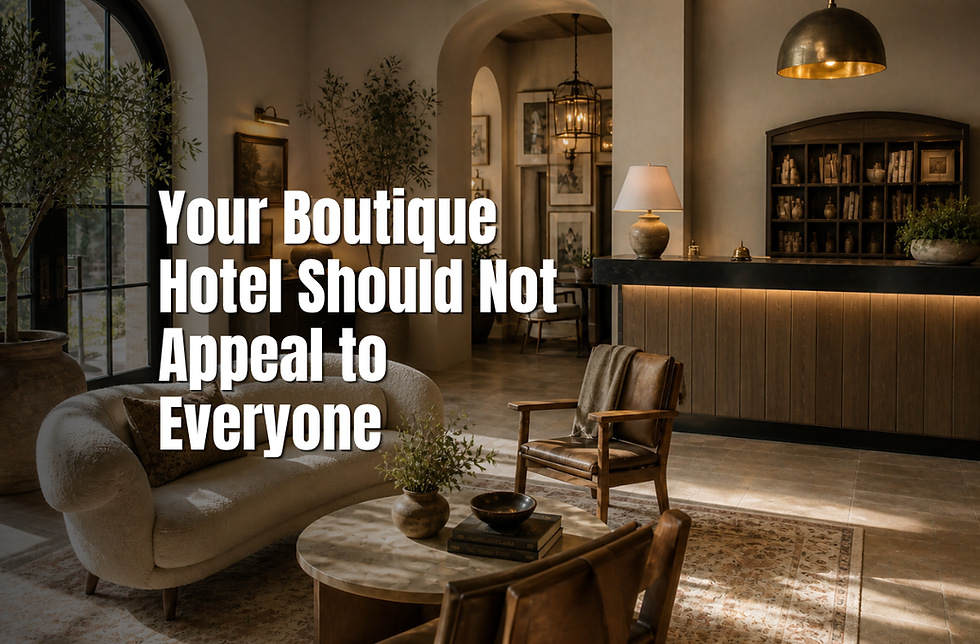
One of the biggest mistakes boutique hotel owners can make is trying to make their property appeal to everyone.
It sounds safe at first. More types of guests should mean more bookings, right?
Families. Couples. Business travelers. Wedding guests. Girls’ trips. Wellness travelers. Weekend tourists. Remote workers. Event guests. Pet owners. Everyone.
But in reality, trying to appeal to everyone often makes a boutique hotel feel less memorable, less clear, and less bookable.
Because when a hotel is trying to speak to every guest, it usually ends up speaking clearly to no one.
Boutique hotels are not meant to feel generic. That is the whole point. Guests choose boutique hotels because they want something with character, personality, and a sense of place. They are not just looking for a bed. They are looking for a stay that feels aligned with the kind of trip they want to have.
That is why niche positioning matters.
A boutique hotel becomes stronger when it knows exactly who it is for, what kind of experience it creates, and why the right guest would choose it over every other option.
Being specific makes your hotel easier to understand.
Guests make decisions quickly.
When someone lands on your website or booking page, they are trying to answer a few questions almost immediately.
Is this the right location?
Does this fit the trip I am planning?
Can I picture myself staying here?
Does it feel worth the price?
If your boutique hotel positioning is too broad, those answers become harder to find. The guest may like the photos. They may think the rooms are pretty. But if they cannot clearly understand the experience, they may keep looking.
Specificity helps guests place themselves inside the stay.
A romantic boutique inn near a historic square tells a different story than a playful boutique hotel designed for girls’ weekends. A wellness-focused retreat with quiet spaces, soaking tubs, and slow mornings speaks differently than a hotel built around group celebrations, events, and social energy.
Neither one is better than the other.
But they should not feel the same.
The more specific the positioning, the easier it is for the right guest to recognize, “This is exactly what we were looking for.”
Vague branding makes booking harder.
A boutique hotel can have beautiful rooms and still struggle if the brand feels unclear.
When everything is described in broad terms like charming, cozy, relaxing, unique, and perfect for any occasion, the property starts to blend in. Those words may be true, but they are not always specific enough to create a strong booking decision.
Guests need more than nice adjectives.
They need to understand the purpose of the stay.
Is this where couples come for a quiet anniversary weekend?
Is it where friends gather before a wedding?
Is it a polished place for business travelers who want something more personal than a chain hotel?
Is it a historic property for guests who love character and walkability?
Is it a retreat-style stay for people who want to rest, reset, and slow down?
Clear positioning does not limit the hotel. It gives the hotel shape.
It tells guests what kind of experience they can expect, and it helps them feel confident before they book.
The right niche makes marketing easier.
When a boutique hotel does not have a clear audience, marketing becomes harder than it needs to be.
Every caption feels like it could go in ten different directions. Every photo could be used for every kind of guest. Every website section sounds general. Every email feels like it is trying to cover too much.
But once the hotel knows who it is speaking to, the messaging becomes much sharper.
A hotel focused on romantic getaways can talk about slow mornings, walkable dinners, cozy rooms, wine packages, anniversary weekends, and thoughtful touches for two.
A hotel designed for girls’ trips can highlight group-friendly layouts, nearby restaurants, photo-worthy spaces, celebration add-ons, and easy access to shopping, wine tasting, or local experiences.
A hotel rooted in historic charm can lean into the building’s story, architectural details, local landmarks, walkability, and the feeling of staying somewhere with a past.
A hotel serving business travelers can focus on easy check-in, reliable Wi-Fi, comfortable workspaces, quiet rooms, parking, location, and a stay that feels more personal than a standard hotel.
A clear niche gives you better content, better copy, better packages, better photography direction, and better calls to action.
Marketing becomes less about filling space and more about making the right guest feel seen.
Niche positioning does not mean turning everyone away.
This is where many owners get nervous.
They hear “niche” and think it means excluding guests or narrowing the audience too much.
But strong positioning does not mean only one type of guest is allowed to stay. It means the hotel has a clear primary audience and a strong reason for existing.
A romantic boutique hotel can still host solo travelers. A wellness-focused hotel can still host friends. A historic inn can still welcome business travelers. A property designed around events may still book quiet weekday stays.
The difference is that the brand is not trying to build its entire identity around every possible use case.
The strongest boutique hotels often have a primary audience, then secondary audiences that naturally fit around it.
For example, a boutique hotel positioned around romantic historic stays may primarily attract couples, but it may also appeal to wedding guests, anniversary trips, solo travelers looking for a peaceful getaway, and people who love walkable destinations.
The positioning gives the property direction without shutting the door on other bookings.
Your niche should be based on the property, not just the trend.
It is tempting to choose a niche because it sounds popular.
Wellness is popular. Girls’ trips are popular. Remote work is popular. Luxury western is popular. Romantic getaways are always popular.
But the best niche for a boutique hotel should come from the actual property, location, layout, guest experience, and operational strengths.
A hotel with tiny rooms and no shared gathering space may not be the best fit for large group celebrations. A property near corporate offices with quiet rooms and strong Wi-Fi may naturally work well for business travelers. A hotel with rich history, beautiful architecture, and a walkable downtown location may be perfect for guests who love charm and local experiences.
The question is not just, “What niche is trending?”
The better question is, “What kind of guest experience can this property honestly deliver better than most?”
That answer is where the strongest positioning usually lives.
The experience should support the promise.
Once a boutique hotel chooses a positioning angle, the actual guest experience needs to support it.
If the hotel is marketed as romantic, the rooms should feel intimate and calming. The lighting should be soft. The bedding should feel elevated. The add-ons should support anniversaries, date nights, and special occasions. The website should make it easy for couples to imagine their stay.
If the hotel is positioned for wellness, the property should feel peaceful and restorative. The rooms should not feel cluttered. The communication should be calming and clear. The amenities should support rest, movement, nourishment, or quiet.
If the hotel is built around local charm, the guest experience should connect people to the destination. The recommendations should feel thoughtful. The design should have a sense of place. The partnerships should highlight nearby businesses and experiences.
Positioning cannot just live in the marketing.
It has to show up in the design, operations, amenities, communication, photography, packages, and service style.
That is what makes the brand feel believable.
Photography becomes more powerful when the audience is clear.
Photos are one of the most important parts of boutique hotel marketing, but not all beautiful photos sell the same thing.
When the audience is unclear, the photo strategy often becomes too generic. A bed shot. A bathroom shot. A lobby shot. A hallway shot. A coffee cup. A chair. A mirror.
Those images may look nice, but they do not always tell the guest why the hotel is right for their trip.
With niche positioning, photography becomes more intentional.
A romantic hotel might show the glow of bedside lamps, a cozy seating nook, wine glasses on a small table, a beautifully styled bathroom, or a walkable evening scene nearby.
A girls’ trip hotel might show spacious rooms, social seating areas, full-length mirrors, a bright lobby, group-friendly amenities, and nearby experiences.
A business-friendly boutique hotel might show a clean desk setup, strong lighting, quiet spaces, easy arrival, and comfortable common areas.
The goal is not just to show the property.
The goal is to help the right guest picture their stay.
A clear niche helps you create better offers.
Boutique hotels have so much potential for thoughtful offers, packages, and add-ons. But those offers work best when they are connected to a clear audience.
A vague hotel might offer random extras and hope guests buy them.
A well-positioned boutique hotel can create offers that feel deeply aligned with the guest’s reason for traveling.
A romantic property can offer anniversary packages, wine and charcuterie, rose petals, dinner recommendations, or late checkout when available.
A wellness property can offer yoga mats, tea service, spa partnerships, breakfast baskets, or quiet morning guides.
A historic downtown hotel can offer walking guides, local tasting experiences, museum partnerships, or curated weekend itineraries.
A hotel that serves wedding guests can offer early check-in options, group room blocks, welcome bags, transportation information, and local beauty or brunch recommendations.
When the niche is clear, the offers stop feeling like upsells and start feeling like hospitality.
The right guests are more likely to value what you offer.
Not every guest values the same things.
Some guests are looking for the lowest price. Some want convenience above all else. Some want luxury. Some want personality. Some want space. Some want walkability. Some want privacy. Some want a social atmosphere.
If your boutique hotel has a clear identity, it is easier to attract guests who value what you actually provide.
That matters because the right guest is often more willing to pay for the experience. They understand the value. They appreciate the details. They are more likely to leave a thoughtful review because the stay matched what they were hoping for.
The wrong guest may not be difficult, but they may be mismatched.
A guest looking for a basic budget stay may not value the design, service, local partnerships, or curated details of a boutique hotel. A guest who wants a lively social atmosphere may not fully appreciate a quiet wellness-style property. A guest who wants a full-service resort may not understand the charm of a small self-check-in historic hotel.
Strong positioning helps reduce that mismatch.
It sets expectations before the guest ever arrives.
Boutique hotels win through clarity.
A boutique hotel does not need to be the best fit for every traveler.
It needs to be clear enough, memorable enough, and aligned enough for the right traveler.
That is where niche positioning becomes powerful.
It helps the brand feel sharper.
It makes the website easier to write.
It gives photography more purpose.
It makes packages more relevant.
It helps guests understand the value.
It gives the team a clearer standard to operate from.
Most importantly, it helps the hotel feel like it stands for something.
Because boutique hospitality is not about being everything to everyone.
It is about creating a stay with personality, intention, and a clear point of view.
When guests can feel that point of view, they are more likely to remember the property, book with confidence, and tell someone else, “This is exactly the kind of place you would love.”

Comments